
Endometriosis and Leaving Early: Going Home Without Calling the Evening a Failure
You made it there, and for a while you were glad you came. Endometriosis and leaving early can become difficult when your body needs something different from the evening you hoped for. Wanting to go home does not erase the effort of arriving or the pleasure you may already have had.
Leaving an event early can be a reasonable response when symptoms change or your energy runs low. Decide what you need, arrange a safe way home and give a brief explanation if you wish. You can appreciate the time you spent with someone without treating the length of your visit as a measure of care.
My perspective comes from years of learning alongside my wife as a husband, blogger and researcher; I am not a clinician, and the NHS and WHO sources used for the health context appear in the references below.
The feeling of endometriosis loneliness even when you are loved can follow you into a room full of people. Being able to leave when you need to matters alongside being welcomed in the first place.
If going home brings a familiar sense that you have let everyone down, my free eBook, You Did NOTHING To Deserve This!, offers words of understanding for that weight. It is there for you after the practical arrangements are finished, without asking you to justify how long you stayed.
You Did NOTHING To Deserve This!
Endometriosis Validation for Women with Endo
- Notice What Has Changed with Endometriosis and Leaving Early
- Make the Journey Part of Endometriosis and Leaving Early
- Find Brief Words for Endometriosis and Leaving Early
- Handle Disappointment Around Endometriosis and Leaving Early
- After Endometriosis and Leaving Early, Let the Visit Still Count
- Plan Flexibility Before Endometriosis and Leaving Early Happens Again
- Final Word on Endometriosis and Leaving Early
- You Did NOTHING To Deserve This!
- FREE eBook
Notice What Has Changed with Endometriosis and Leaving Early
The first decision is about what you need now, not whether you were right to accept the invitation. Perhaps sitting has become uncomfortable, fatigue has caught up with you, or the journey home is beginning to feel more demanding. You can respond to that information without turning it into a verdict on your earlier choice.
The NHS recognises pelvic pain and fatigue among possible endometriosis symptoms. WHO also describes effects on social life and quality of life. Those sources explain why participation can be difficult; they do not supply a universal time limit for visits or tell you what every change in symptoms means.
Our social life has become smaller because of illness, and I know that losing an evening can carry more emotion than its place in a calendar suggests. I would not want my wife to feel that she must stay longer simply because getting there mattered. Something can be precious and still need to end sooner than hoped.
Ask yourself whether you want a brief pause, help with something specific, or to leave. A pause is an option only if it suits you. It should not become another round of proving that you have tried hard enough before you are allowed to go home.
If you feel suddenly or seriously unwell, seek appropriate medical help rather than treating the situation only as an awkward goodbye. Do not assume every new symptom is endometriosis. This guide concerns social arrangements and communication, not deciding whether symptoms are medically safe to manage at home.
Make the Journey Part of Endometriosis and Leaving Early
Before you start a round of goodbyes, work out how you will get home or to wherever you need to be. Check the practical details that matter: who is travelling with you, where you will meet, and whether a booked journey can change. A clear arrangement can reduce the amount you have to organise while tired.
If someone brought you, ask directly about the available options. They may be able to leave with you, help arrange another journey or find a quieter place while transport is organised. Avoid assuming they have understood a hint, especially in a noisy room where conversation is easily missed.
As a partner, I can take responsibility for a practical task without taking over the decision. I want my wife to be able to tell me what she needs without also managing my reaction. Looking up a route or collecting a coat can be more helpful than debating whether the evening should continue.
Do not choose a journey that feels unsafe just to avoid inconvenience. If you are not well enough to travel independently, ask for appropriate help. The useful question is what arrangement works in your current circumstances, rather than how to leave without anybody noticing that your needs have changed.
If someone depends on you, such as a person you are caring for or someone sharing your transport, make the necessary handover clear. Taking your own limits seriously can include telling the relevant person what is changing. You do not need to complete every social courtesy before dealing with those essentials.
Find Brief Words for Endometriosis and Leaving Early
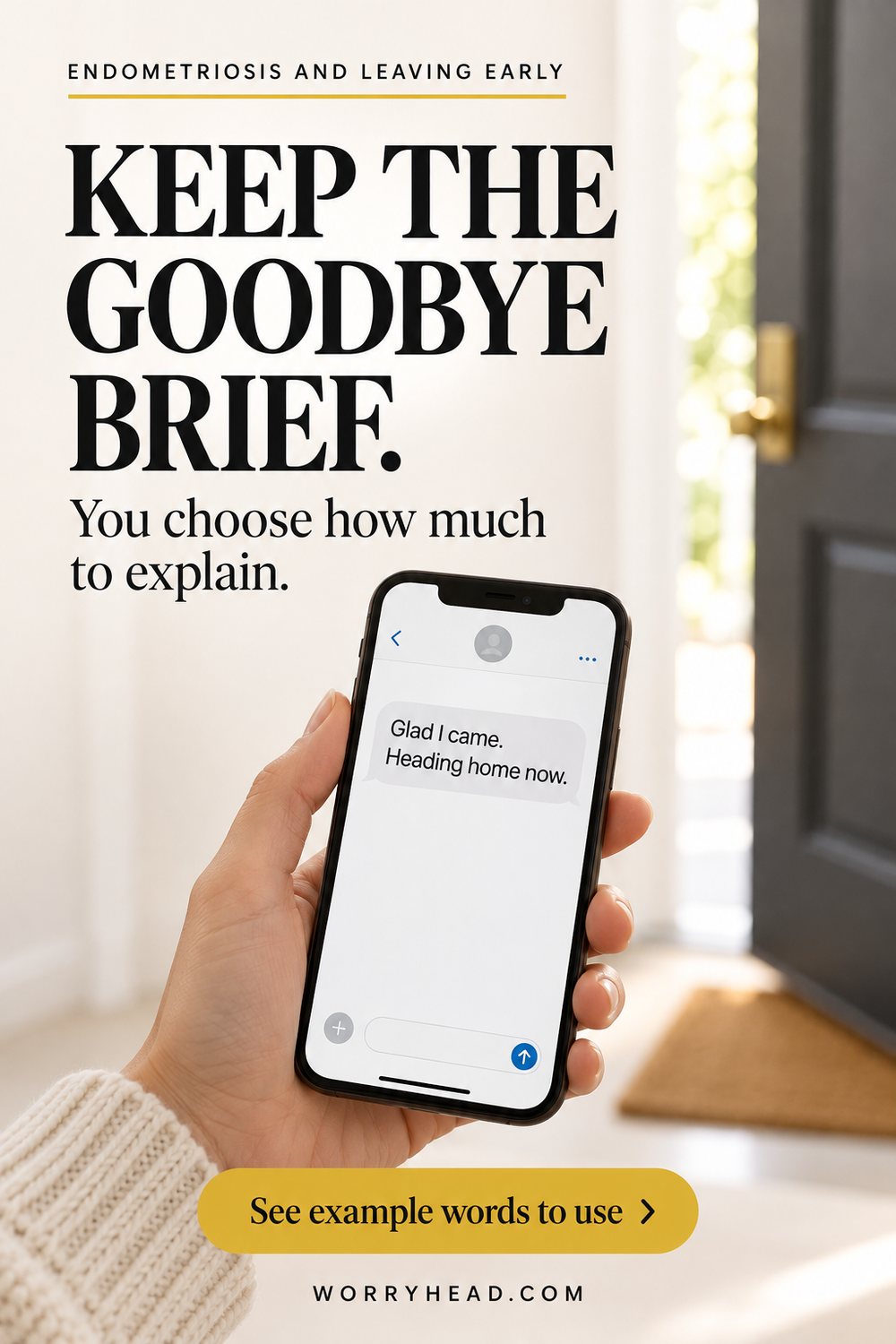
A short explanation can acknowledge the occasion and communicate the decision. You could say, “I am glad I came, but I need to head home now.” If you want to mention symptoms, you can add that you are not feeling well. Neither version requires a detailed account of your health.
You might prefer to tell the host quietly instead of announcing your departure to the whole room. If they are occupied, consider whether a brief message or telling a trusted person is more practical. The right choice depends on the event and your immediate needs, not a rule that every goodbye must look the same.
My wife’s illness has taught me to be careful about the pressure hidden inside apparently small requests. “Stay for one more thing” may sound affectionate, but it can still ask her to keep negotiating after she has reached a limit. I want warmth to make leaving easier, not make the decision harder to say aloud.
If someone asks you to stay, you can repeat the essential point: “Thank you, but I do need to go.” Use a tone and level of detail that feel comfortable and truthful for you.
You can express appreciation without promising compensation. “It was lovely to see you” does not need to be followed by an offer to host, buy another ticket or attend something longer next time. Affection is allowed to remain affection rather than becoming a debt you must settle later.
Handle Disappointment Around Endometriosis and Leaving Early
You may be disappointed even when the decision is clear. Perhaps you missed the part you most wanted to see, or felt separate from friends who were still enjoying themselves. Recognising that loss does not mean you made the wrong choice. Relief and sadness can belong to the same departure.
Someone else may be disappointed too. You can hear that without accepting pressure to ignore your needs. If there is a practical consequence, such as a shared booking or changed lift, address what needs arranging. The conversation does not have to become an argument about whether you care enough.
Losing dancing from our life was not a minor change, and I do not want to offer you the easy reassurance that another plan will replace everything you miss. Some occasions matter deeply. Support can respect that grief while still recognising that staying beyond what you can manage will not restore the old life.
If you are leaving with a partner, be clear about whether you want them to come with you or whether another arrangement genuinely suits you both. Do not offer for them to stay solely because you believe you must make your needs invisible. Equally, do not assume every couple has the same preference or practical options.
Repeated mockery or pressure deserves attention beyond this one evening. You can return to the pattern when you have more space to think and decide what support you want. A tired moment at a doorway does not have to become the time you resolve the whole relationship.
After Endometriosis and Leaving Early, Let the Visit Still Count
Once you are home, you may find yourself reviewing every expression or sentence. You might wonder whether the host was annoyed, whether somebody thought you were rude, or whether you should have stayed another half-hour. Those questions can feel urgent even when you do not have enough information to answer them.
If you want to send a message, keep it proportionate. A simple thank-you can acknowledge the time you shared. You do not need to write an extended defence of your departure, and you can wait until you have the attention for it. Immediate reassurance from everyone is not a task you must complete before resting.
Blogging helps me focus my own thoughts, but I know that reflection can also become another demand if I insist on it at the wrong time. I would rather ask what would help my wife now than turn her return home into a review of how the outing went. Quiet company may be more welcome than analysis.
Try remembering one part of the visit that mattered, if that feels useful. It might have been a conversation, seeing someone you miss or simply choosing to go. This is not an instruction to find a positive side to pain. It is an option for resisting the idea that an unfinished evening contained nothing worthwhile.
You are also allowed to decide that the event was difficult and leave the meaning unresolved. Not every experience needs to become a lesson before bed. Another day may give you a clearer sense of whether you want to change anything about a future plan.
Plan Flexibility Before Endometriosis and Leaving Early Happens Again
For a future occasion, consider one arrangement that would make departure simpler. You could tell the host that your visit may be shorter, check transport options or agree with a companion how you will communicate. Choose the detail that would reduce effort for you rather than making an elaborate plan for every possibility.
If you want people to keep inviting you despite changes in attendance, asking friends to keep including you when plans change can help make that preference clear. An early departure does not automatically tell them what you want from future invitations.
We both still work, so costs and time matter to us too. Flexible arrangements do not always mean paying for separate transport or buying tickets you may not use. Talk about realistic limits before spending where possible, and avoid treating the most expensive option as proof of better support.
If symptoms are repeatedly limiting your activities, discuss them with your healthcare team. Practical changes to social plans can help with access and communication, but they are not a substitute for medical care. You deserve support with the symptoms as well as understanding when they affect an occasion.
Final Word on Endometriosis and Leaving Early
What I want for my wife is room to participate without having to promise a version of herself that illness may not allow that day. I want her presence to matter without its value being measured in hours. You deserve relationships that can recognise the same distinction.
Endometriosis and leaving early can involve a real loss, a practical decision and a need for care at the same time. Arrange what is necessary, say as much as you choose, and let the part of the evening you attended remain part of your life. Going home does not cancel having been there.
You are welcome to comment with a phrase or arrangement that made leaving easier, without explaining private symptoms. If guilt follows you home, my free eBook, You Did NOTHING To Deserve This!, offers companionship for that quieter part of the evening.


About Me
Hi, I’m Lucjan! The reason why I decided to create this blog was my beautiful wife, who experienced a lot of pain in life, but also the lack of information about endometriosis and fibromyalgia for men…
READ MORE
Grab a FREE eBook!
“You Did NOTHING To Deserve This!”
Finally hear the words nobody ever said to you, that your pain is real, your tears make sense, and you did nothing to deserve endometriosis, the dismissal, or the way it has rewritten your life.
Related Questions You May Be Asking About Endometriosis and Leaving Early
Is Leaving Early the Same as Cancelling?
No. You attended, and your needs changed or you reached a limit. You can appreciate the time you spent there while deciding to leave. If you want future invitations, say so rather than assuming the host will infer it from this visit.
Do I Owe Everyone an Explanation?
You can keep health details private. Tell the people who need practical information, such as your host or someone sharing your transport. Depending on the circumstances, a short goodbye or message may be enough; there is no need to account for your symptoms to the whole room.
Should My Partner Always Leave with Me?
That depends on your needs, preferences and safe travel arrangements. Discuss the options directly. A partner staying is not automatically neglect, and a partner leaving is not a debt you must repay. What matters is an arrangement that takes your actual situation seriously.
What If I Feel Guilty Afterwards?
Guilt does not prove that leaving was wrong. You can acknowledge any practical inconvenience without blaming yourself for illness. If guilt or distress is persistent and affects daily life, consider discussing it with your GP or a qualified mental health professional.
Endometriosis and Leaving Early References
- https://www.nhs.uk/conditions/endometriosis/
- https://www.who.int/news-room/fact-sheets/detail/endometriosis
